How Valley View, OH Businesses Can Choose the Right Hino Truck for Daily Work
Valley Automotive Superstore – How Valley View, OH Businesses Can Choose the Right Hino Truck for Daily Work
For many businesses around Valley View, OH, a commercial truck is more than transportation. It is a mobile workspace, a delivery platform, a tool carrier, and often one of the most visible parts of the company. That is why choosing a Hino truck deserves a deeper look than simply comparing mileage, cab color, or body length. A good truck should match the way your team works on real roads, from Canal Road and Rockside Road to I-77, I-480, and the industrial corridors that connect Valley View with Cleveland, Independence, Garfield Heights, and surrounding communities. A Hino truck may be used for local freight, landscaping, plumbing, electrical service, food distribution, construction support, or municipal-style duties, but each use case asks for a slightly different configuration.
The first step is identifying the truck’s actual workload. Think about the heaviest load your business carries, not just the average load. Add the weight of shelving, liftgates, refrigeration equipment, toolboxes, racks, fuel, passengers, and any installed body. This helps prevent a common mistake: buying a truck that looks large enough but operates too close to its limits. A properly matched Hino can help support braking performance, handling, driver confidence, and long-term durability. It can also make daily routes more efficient, especially when drivers need to navigate tight turns, customer lots, loading docks, alleys, and mixed highway traffic.
Start with GVWR, Payload, and Body Style
Gross vehicle weight rating is one of the most important numbers in commercial truck shopping. It tells you the maximum allowable weight of the truck, body, passengers, cargo, and equipment. Payload is what the truck can carry after accounting for its own curb weight and installed body. For a Hino buyer, these numbers should guide the shopping process from the beginning. A truck with the wrong body or undersized rating can create operational headaches, while an oversized truck may add unnecessary complexity for tight local routes.
- Box trucks: Good for parcel delivery, furniture, retail inventory, event supplies, and general freight that needs enclosed protection.
- Refrigerated bodies: Helpful for food, floral, medical, and temperature-sensitive delivery routes where insulation and cooling equipment matter.
- Flatbeds and stake beds: Practical for landscaping, building materials, palletized cargo, and equipment that loads from the side or overhead.
- Service bodies: Useful for contractors, utility work, maintenance teams, and mobile repair operations that need organized tool storage.
- Dump bodies: Often selected for landscaping, construction, municipal work, debris hauling, and material transport.
Once the body style is clear, review wheelbase and cab-to-axle measurements. These dimensions affect upfit compatibility, turning radius, weight balance, and how the truck behaves when loaded. A shorter wheelbase may be easier to maneuver around urban delivery zones, while a longer wheelbase may support a larger cargo body. For Valley View businesses serving both suburban accounts and Cleveland job sites, this balance can make a major difference in day-to-day usability.
Consider Driver Comfort and Route Efficiency
Driver comfort is not a luxury in a work truck. It affects productivity, safety, and retention. Hino trucks are often appreciated for practical cab layouts, broad visibility, and straightforward controls, which can help during routes with frequent stops. A driver who climbs in and out dozens of times per day will care about step height, grab handles, seating position, mirror coverage, door opening size, storage space, and climate control. These details can make local delivery or service work feel more manageable.
Route type should also influence the decision. A business that runs mostly highway miles toward Akron or Cleveland may value power delivery, gearing, ride stability, and driver-assistance features. A company that works in dense neighborhoods may place a higher priority on visibility, low-speed maneuverability, and braking feel. Businesses around Valley View often deal with a mix of road types, including industrial access points, freeway ramps, bridge grades, and customer lots. That makes it important to test drive with realistic expectations, not just a quick loop around the block.
New Versus Used Hino Trucks
New Hino trucks may appeal to businesses looking for current technology, warranty coverage, fresh maintenance timelines, and custom upfit planning. A new chassis can be ordered or selected with the right wheelbase, body preparation, and equipment needs in mind. This can be especially useful when your operation has specific requirements such as liftgate capacity, refrigeration, shelving, side doors, or specialized tool storage.
Used Hino trucks can be a practical option when a business wants quicker availability or a work-ready configuration. However, inspection quality matters. Review service records, oil change history, brake condition, tire wear, suspension components, frame condition, emissions system operation, and any warning lights. For box trucks, check roof seams, flooring, roll-up doors, side panels, interior lighting, and liftgate function. For flatbeds or dump bodies, inspect hinges, hydraulics, bed condition, corrosion points, and tie-down areas. A used commercial truck should be judged by maintenance, application, and body condition, not mileage alone.
Why Service Support Should Influence Your Purchase
A commercial truck that cannot stay on the road cannot support your business. Before buying a Hino truck, ask how maintenance will fit into your schedule. Preventive service should include oil and filter changes, fluid checks, brake inspections, tire rotations or replacement, battery testing, lighting checks, and diagnostic reviews when warning lights appear. If the truck has a specialized body or equipment, include those components in the maintenance plan as well.
Valley Automotive Superstore supports shoppers with service centers, online scheduling, certified technicians, advanced diagnostic equipment, genuine parts resources, and assistance for many makes and models. That matters for businesses that cannot afford uncertainty when a vehicle needs attention. Our parts resources also help with factory OEM and aftermarket availability, accessories, and trained professional guidance, which can be valuable when maintaining a work truck or preparing a vehicle for a new role.
Financing and Trade Planning
Commercial truck financing should be aligned with how your business uses the vehicle. Some owners plan to keep a truck for many years, build equity, and maintain a consistent fleet. Others need flexibility as routes, contracts, or staffing change. Before applying, gather basic business information, expected use, trade details, and any upfit requirements. A trade evaluation can also help simplify the transition from an aging truck into a more capable Hino.
Valley Automotive Superstore works to make financing easier to understand by walking shoppers through available options, flexible payment structures, and credit considerations. The goal is not only to help you acquire a truck, but to help you choose an ownership path that fits your business plan. A commercial vehicle should support cash flow, uptime, and operational confidence.
Frequently Asked Questions:
What size Hino truck should my business consider?
Start with payload, body type, cargo dimensions, and route needs. The right size should safely carry your heaviest realistic load while remaining maneuverable for your service area.
Is a used Hino truck a good business purchase?
It can be, especially if the truck has strong maintenance records, a suitable body, clean inspection results, and equipment that fits your operation without major changes.
Should I choose a box truck or a flatbed?
Choose a box truck for enclosed cargo protection and organized delivery. Choose a flatbed or stake bed for materials, landscaping equipment, pallets, and side-loading flexibility.
How can I reduce downtime after buying a Hino truck?
Schedule preventive maintenance, address warning lights quickly, inspect tires and brakes often, keep service records, and work with a service team that understands commercial vehicle needs.
A well-chosen Hino truck can become a dependable part of your daily operation around Valley View, OH. By focusing on workload, body configuration, driver needs, financing, and service support, you can make a smarter decision from the start. When you are ready to compare commercial truck options, review trade value, discuss financing, or plan service, Valley Automotive Superstore is here to help our customers move forward with confidence.
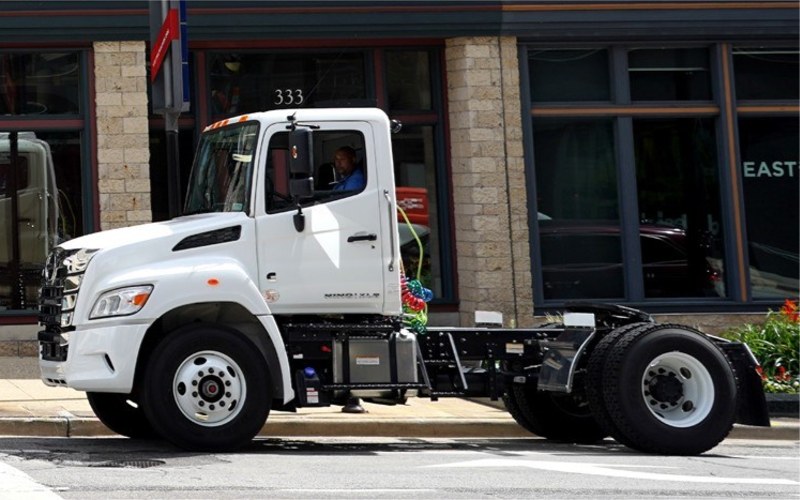
*Image may not be actual model